The Theory
Why is the world suddenly paying attention to women's money? We explore the Great Wealth Transfer and ask why financial literacy alone cannot fix an economic system that was never designed to fully count women's contributions.

Where women learn to make their value visible.
SheCounts is a research-led project that helps women build confidence with numbers in their finances, careers and creative work. Through conversations between a designer and a political economy teacher, we explore salary, unpaid work, negotiation, entrepreneurship and business impact across eight modules. Financial confidence is not just about understanding numbers. It is about knowing how to use them, and that shift in awareness is what starts to change the traditional, patriarchal roles society still runs on. This is the beginning: we spread the knowledge first, then build the community around it.
We begin with the myth of why women think they're bad with numbers, then go deeper, module by module, through the rest.
In each module, a designer asks the questions and a political economy teacher brings the evidence. Read the full conversations here, then follow the key ideas and practical takeaways on LinkedIn.
Where did the idea that women are bad with numbers come from? We examine stereotype threat, the mathematics hidden in traditionally female work and what girl math reveals about confidence and culture.
Why is the world suddenly paying attention to women's money? We explore the Great Wealth Transfer and ask why financial literacy alone cannot fix an economic system that was never designed to fully count women's contributions.
Understanding money is not the same as feeling confident using it. This module is about knowing your numbers, making informed decisions and recognising the financial leadership women already practise every day.
Does measuring something reduce its meaning, or make its value visible? From welfare economics to a 95 million euro painting, we explore why creative work and unpaid labour need to be counted.
What does unpaid work really cost? We put care work, career breaks and the married-man career advantage into numbers, then examine how family decisions shape women's long-term financial independence.
Why do women underprice their work? We unpack scope creep, unpaid networking and the pressure to work for exposure. We then introduce a practical way to price freelance projects using evidence rather than instinct.
Women make up much of the creative workforce but remain underrepresented where budgets and strategies are decided. We explore how measuring outcomes and speaking the language of business can strengthen influence, pay and career progression.
Numbers become less intimidating when they become useful. We demystify Excel, show how a pivot table can support research synthesis and explain how to turn salary data into stronger decisions and negotiations.
The research and reporting shaping this conversation. Scroll for more.
Italy still has the EU's widest gender gap in both paid and unpaid work: women do 2h27m more unpaid family work a day than men, even as the gap slowly narrows.
Read more ↗Owning your money and your financial decisions isn't just personal. It's an economic multiplier.
Read more ↗Two decades of progress on gender parity are now fragile, the WEF's latest global benchmark finds.
Read more ↗INAPP research frames inactive women willing to work as a strategic resource for Italy's demographic transition.
Read more ↗The EU's gender employment gap sits at 10.0 points in 2024 (women at 70.8%, men at 80.8%), though it's narrowed in 22 countries.
Read more ↗Since 1995, childcare costs have nearly tripled, leaving working mothers with less and a wage penalty on top.
Read more ↗Paid and unpaid care work holds up the entire economy, and it's still chronically undervalued.
Read more ↗A data breakdown of average salaries in Italy, by region, sector and gender.
Read more ↗The OECD's case for financial education policy designed specifically around women's needs and behaviour.
Read more ↗Gender gaps in account ownership persist across 65 economies. The next fight is over who actually gets to use the money.
Read more ↗Six figures from the sources behind this series: the starting evidence for every conversation that follows.


We want to do more than share knowledge. We want to build a community where women can share, learn and grow together. A newsletter is on its way, with real conversations and tools you can put to use straight away.
Join the community email list →The format is a running dialogue between two disciplines that rarely share a room.
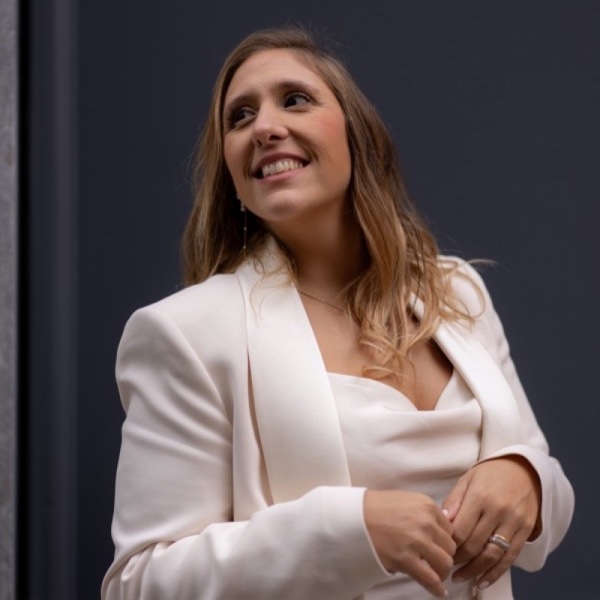
13+ years bridging design methodology and business language, turning research into numbers that stakeholders act on and creative teams can stand behind.
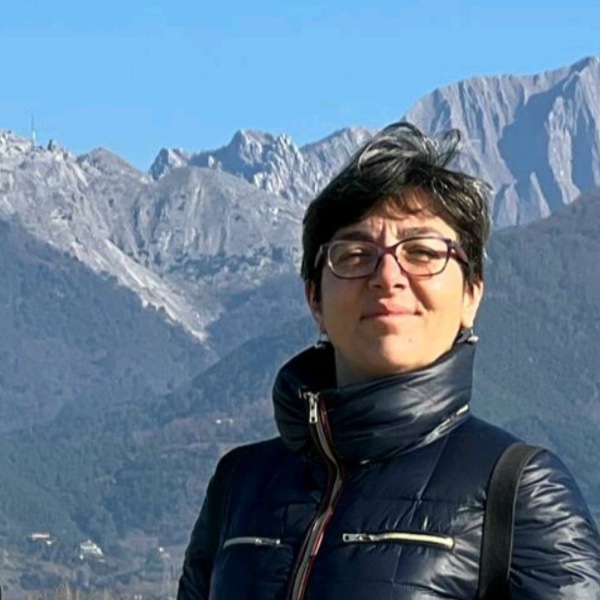
Studied political economy at LSE and Bocconi. Co-founder of Elesta. Teaches business planning and gender economics at Domus Academy. Brings the theory, the data, and the lived experience of running a business while raising four children.

Questions, ideas, or just curious about SheCounts? Say hello and we'll keep you posted as the series, the survey and the newsletter come together.